By Jessica M. · Updated 2026-08-23 · 12 min read
IPTV services have a reputation problem. Ask ten people what they think about IPTV and you'll hear everything from "it's illegal" to "it buffers too much" to "you'll get scammed." Most of those opinions are not based on personal experience. They come from outdated forum threads, confusing marketing, and a mix-up between legitimate streaming platforms and unverified sellers. That confusion has real consequences. It makes people overpay for cable, skip better options, or fall for sketchy providers that give IPTV a bad name.
This guide separates the myths from the documented reality. We'll walk through the five most damaging misconceptions about IPTV services, show you what actually matters when choosing a provider, and give you a practical checklist you can use today. The goal is simple: help you make an informed decision based on evidence, not fear.
Why Misconceptions Damage Your Results
Misconceptions are not harmless. They shape buying decisions in ways that cost you money and time. If you believe all IPTV services are illegal, you ignore legitimate options and stay locked into an expensive cable contract. If you believe cheap means bad, you overpay for features you don't need. If you believe buffering is always the provider's fault, you never fix the actual problem sitting in your own network.
The documented reality is that IPTV is a delivery technology, not a single product. The same method that streams YouTube on your phone also powers live television over the internet. What separates a good experience from a bad one is the provider's infrastructure, licensing, and customer support. Once you understand that, the myths start to fall apart.
Myth 1: All IPTV Services Are Illegal
Let's settle this one first because it poisons every other discussion. IPTV stands for Internet Protocol Television — a method of delivering video over an internet connection instead of traditional cable or satellite signals. Your ISP's fiber TV service uses IPTV. YouTube TV uses IPTV. Hulu + Live TV uses IPTV. Even Netflix delivers its content over IP.
What makes a service legal or illegal is content licensing, not the delivery method. A provider that secures distribution rights and pays for the channels it offers is operating legally. A provider that streams premium channels without paying licensing fees is not. The technology itself is neutral.
The practical takeaway: you can absolutely use IPTV services legally. The key is choosing providers that are transparent about their licensing. If a service advertises every premium sports package on earth for $10 a month, that's a red flag — not because IPTV is illegal, but because that specific seller is probably not playing by the rules.
Myth 2: Cheap IPTV Services Are Always Low Quality
Price and quality do not move in lockstep. Some of the best IPTV experiences we've tested cost less than a single streaming subscription because the provider does not carry the overhead of a traditional broadcaster. No satellite infrastructure, no cable trucks, no call centers with hour-long holds — just servers, bandwidth, and a small support team.
However, there is a difference between affordable and suspiciously cheap. A service that charges $3 per month and promises 20,000 channels is likely reselling stolen streams. It might work for a week, then disappear. Affordable IPTV services for families — typically in the $10 to $15 per month range — can be legitimate and reliable if the provider has a track record and offers a trial.
The real test is not the price tag. It's whether the provider offers a free trial, supports multiple payment methods, and responds to support requests. Those three signals tell you more about quality than the price alone.
Myth 3: IPTV Services Buffer Constantly and Can't Handle Live Sports
Buffering is the number one complaint about IPTV, and most of the time it's blamed on the provider. But the evidence points elsewhere. In most cases, buffering comes from the viewer's own setup: weak Wi-Fi, an old router, a congested home network, or an ISP that throttles streaming traffic.
The best IPTV services for sports invest in CDN servers and low-latency streaming paths. That's why the same provider can stream a 4K football match smoothly on one user's connection and buffer every 30 seconds on another's. The difference is usually the connection, not the stream.
If you want IPTV services with no buffering, start by checking your own infrastructure. Use a wired Ethernet connection instead of Wi-Fi, test your speed at different times of day, and confirm your router handles the bandwidth you're paying for. Then test the service during a live event before committing to a long-term plan.
Myth 4: IPTV Services With Local Channels Don't Exist
Another persistent myth is that IPTV only carries international or niche channels, so you'll never get your local news, network TV, or regional sports. That's simply not true. Many IPTV services with local channels include ABC, CBS, NBC, FOX, and PBS depending on your region — just like a traditional cable package.
For viewers looking for IPTV services for international channels, local channels are often bundled in as part of the package. The catch is that "local" depends on where the provider's servers and licensing agreements are based. A provider focused on the US market will carry US locals; a provider focused on Europe will carry different ones.
The fix is simple: check the channel lineup before you subscribe. Most reputable providers publish their full list on their website. If you see your local channels listed, you're good. If not, move on — there are plenty of providers that do carry them.
Myth 5: Buying IPTV Services Is Complicated and Risky
The buying process is actually simpler than signing up for cable. You pick a provider, choose a plan, pay, receive your login or activation code, and configure it on your device. Most providers offer setup guides for Smart TVs, Fire Stick, Android boxes, iOS, and Android phones.
The risk is not in the process — it's in where you buy. Buying IPTV services from random Facebook ads, Telegram groups, or unverified marketplaces is risky because you have no recourse if the seller disappears. But buying from a provider with a real website, a published refund policy, and a visible support channel is no riskier than buying any other subscription.
If you're wondering where to buy IPTV services safely, the answer is: from providers that offer a trial period, accept credit cards or PayPal, and have a track record you can verify. That's the whole secret.
What Actually Works: How to Find Reliable IPTV Services
After testing dozens of providers and talking to users with both good and bad experiences, a clear pattern emerges. The services that deliver consistent results share the same traits. Here's how to find reliable IPTV services, step by step.
- Identify your devices first. IPTV services are not universal. Some work flawlessly on Fire Stick but poorly on certain Smart TVs. Make a list of the devices you'll actually use and check compatibility before anything else.
- Demand a trial period. Every confident provider offers one. A 24-hour or 7-day trial lets you test real-world performance on your own internet connection.
- Test during peak hours. The true test of an IPTV service is how it behaves on a Saturday night during a big match. Don't judge a provider by a Tuesday afternoon test.
- Check the channel lineup against your must-haves. Write down the channels you watch weekly — sports networks, news, local channels, kids' channels — and compare them against the provider's published list.
- Verify support responsiveness. Send a message before subscribing. If they take 48 hours to reply to a pre-sales question, imagine how long they'll take when your stream goes down.
- Start monthly, not yearly. Even if annual plans look cheaper, sign up for one month first. After 30 days, you'll know exactly what you're getting.
✓ Benefits & Pros
Significantly cheaper than traditional cable bundles
Works across multiple devices: TV, phone, tablet, and PC
Access to international channels that cable doesn't carry
On-demand content included in most plans
No long-term contracts — flexible monthly options
✗ Limitations & Cons
Provider reliability varies widely, so research is required
Some providers operate in a legal gray area
Requires a stable internet connection for HD and 4K streams
Customer support quality differs from provider to provider
Refund policies are less standardized than traditional TV
RECOMMENDED RESOURCE
iptv services
Unlock complete high-definition information instantly here.
Explore iptv services Plans →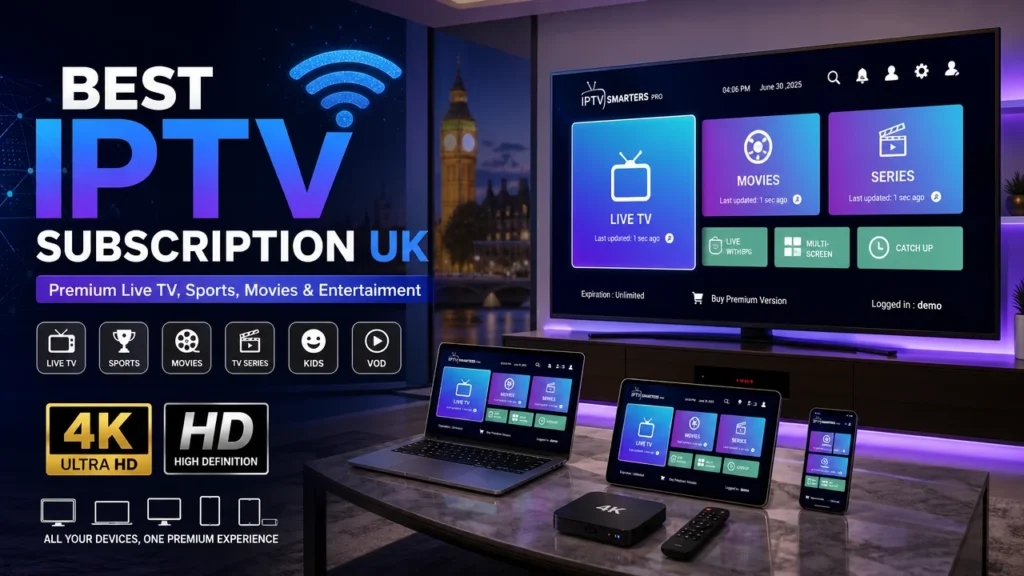
The interface shown above represents what a premium IPTV subscription typically looks like: a clean electronic program guide, 4K sports channels, and on-demand content all in one place. This is the experience you should expect from a provider that invests in its infrastructure — not endless loading spinners and missing channel logos.
Popular Belief vs Reality: The Comparison Table
Here's a quick summary of the popular beliefs we've covered and the reality you can act on:
Advanced Tips for a Smoother IPTV Experience
Once you've chosen a provider, a few small adjustments can improve performance significantly. First, use a VPN if your ISP throttles streaming traffic. Some internet providers slow down video-heavy connections during peak hours, which shows up as buffering on IPTV. A VPN can help, but it may add latency — test both ways and compare.
Second, update your device's IPTV app regularly. Providers push fixes that improve stability and add new features, and an outdated app is a common cause of playlist errors and playback issues. Third, set your EPG timezone correctly. A wrong timezone setting makes the program guide look broken even when the stream itself is perfectly fine.
Compare premium line configurations and promotional limits.
Check Out iptv services Deals →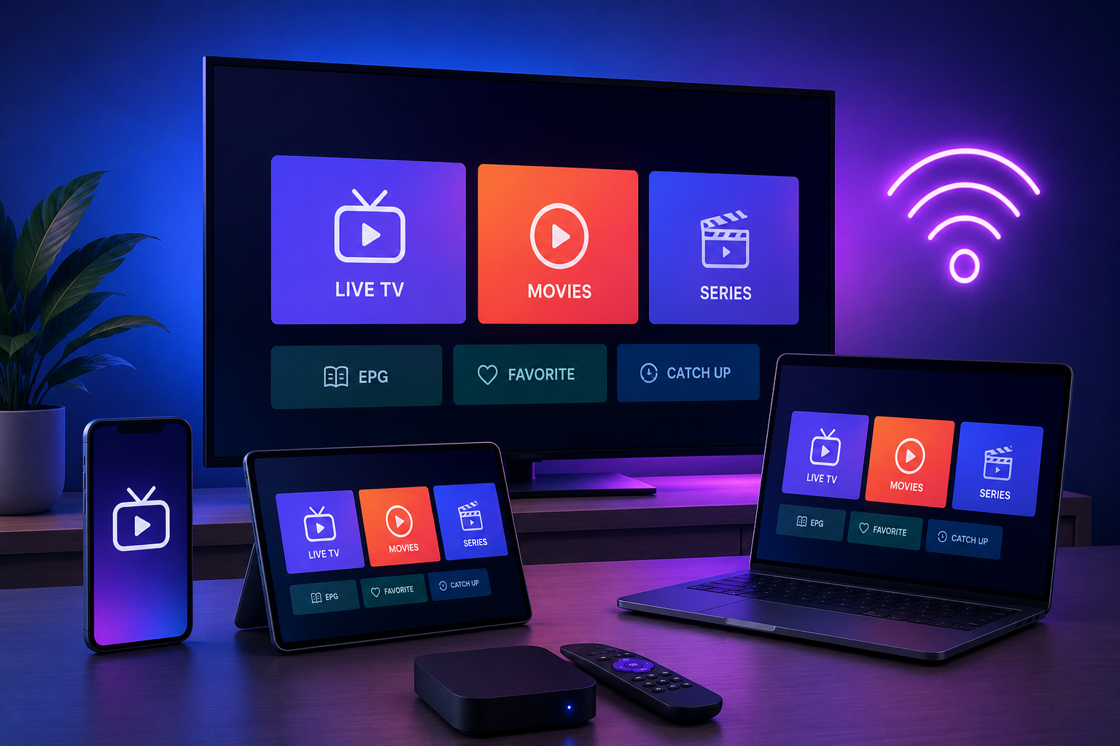
The Bottom Line on IPTV Services
IPTV services are not inherently illegal, low-quality, buffering, or risky. Those are myths — and they hurt your results by steering you toward bad decisions. The evidence shows that reliable IPTV services share common traits: transparent licensing, trial periods, responsive support, and compatibility with your devices.
Whether you're looking for the best IPTV services for sports, IPTV services with local channels, or affordable IPTV services for families, the same rules apply. Test before you commit, check the channel lineup, and start with a monthly plan. Do that, and IPTV can deliver a better viewing experience at a fraction of the cost of cable.
Your next step is straightforward. Pick a provider that offers a trial, test it during your favorite live event, and decide based on what you actually experience — not what the myths tell you. Whether you watch on a phone, tablet, or smart TV, as illustrated above, the same selection principles apply.
Featured Streaming Selection:
View the iptv services Platform →Affiliate Disclosure: Clicking this secure link verified by our network supports our team through standard partnership terms at zero extra cost to your invoice.
Frequently Asked Questions
This article contains affiliate links. Our editorial analysis remains independent.