By Daniel R. · Updated 2026-08-22 · 14 min read
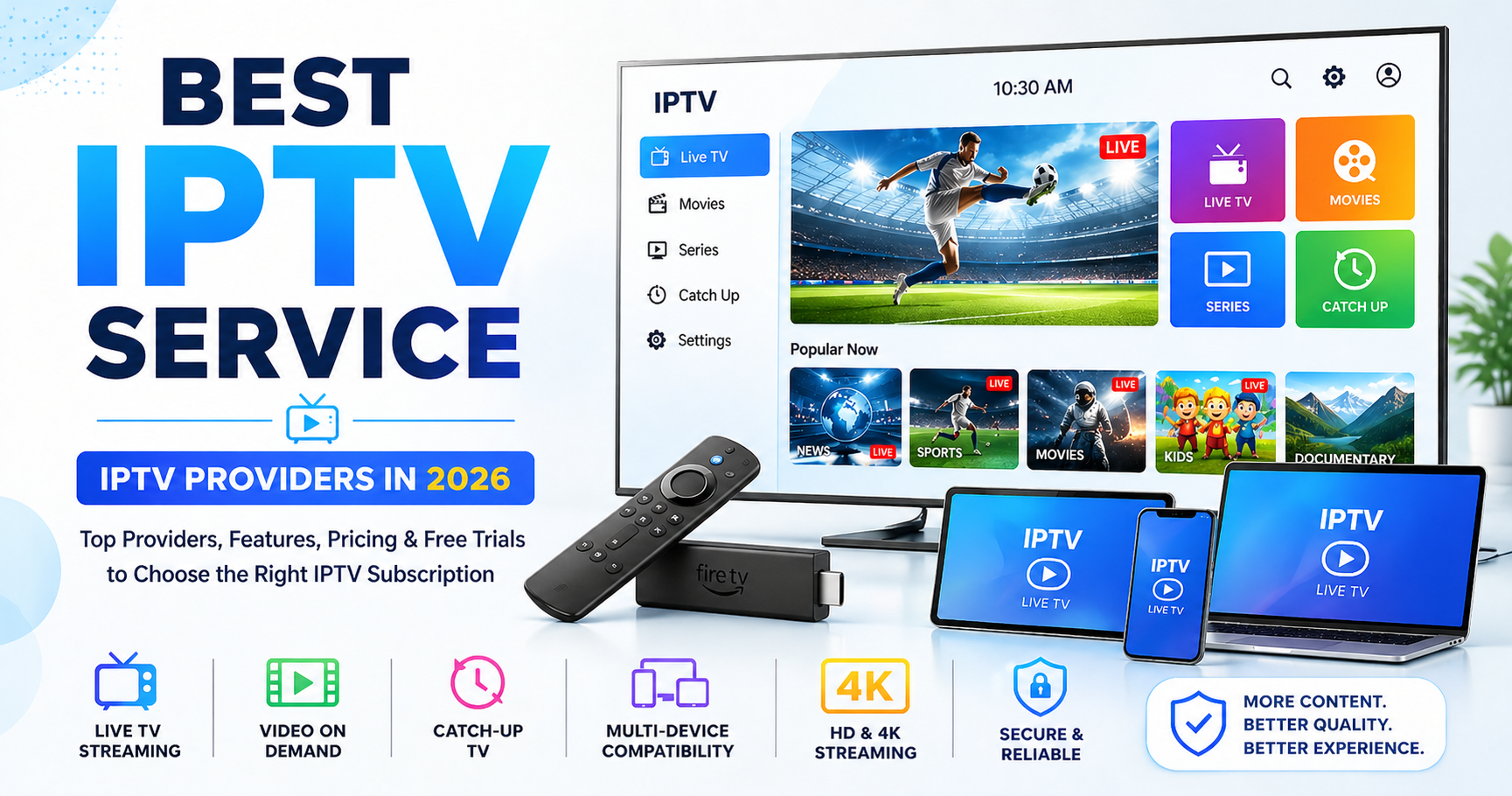
An IPTV service delivers television channels and on-demand video over your internet connection, replacing the cable box, satellite dish, or antenna. It's not a single product but a category that spans free legal apps, premium providers, and gray-market resellers. That's why opinions vary so wildly online — some people describe IPTV as a perfect cable replacement, while others call it an unstable hobby project. Both groups are describing real experiences with different providers.
To make the right choice, you need to understand what IPTV actually does, which features matter, and how to spot a provider that will still be operating next year. This guide covers the basics of how IPTV works, the concrete benefits and limitations, and a practical setup path for smart TVs, Fire Sticks, and mobile devices. You'll also find a direct comparison with traditional TV and streaming apps, plus answers to the questions that come up in nearly every iptv service review reddit thread.
The interface below shows what a typical IPTV service looks like once you're logged in: live channels on the left, a searchable on-demand library in the middle, and catch-up TV recordings ready to play. Familiarizing yourself with this layout makes the rest of the setup process much less intimidating.
What Is IPTV Service Exactly?
IPTV stands for Internet Protocol Television. Instead of broadcasting a signal that anyone can pick up, IPTV sends television content as data packets over an IP network — the same type of network that carries your web browsing and video calls. Traditional TV pushes one signal to everyone at once. IPTV establishes a direct connection between the provider's server and your device, which makes it easier to personalize and interact with the content.
Three delivery models are common in IPTV: live television (channels streamed in real time), video on demand (VOD, similar to a rental library), and catch-up TV (recent broadcasts stored for later viewing). Most paid services include all three. The electronic program guide (EPG) is the grid that shows what's airing now and next — a feature that seems minor until you try navigating a service without one.
Providers give you access through one of two methods: an M3U playlist URL or an Xtream Codes login. Both contain the same basic information — your subscription credentials and the server address — but they work differently in player apps. Apps like IPTV Smarters, TiviMate, and IBO Player are what you install on your device to actually watch the streams. The provider supplies the content, but the app is what you interact with every day.
How IPTV Works Step by Step
Knowing how the delivery chain works helps you troubleshoot problems and set realistic expectations. Here's what happens from the moment you press play on a channel.
- The provider sources channels from broadcasters or content distributors and converts them into digital streams. Legal setups involve licensing agreements; gray-market setups often re-broadcast streams without authorization.
- Those streams are transcoded into formats that work across devices — HLS and MPEG-TS are the most common — and placed on servers, often distributed through a content delivery network (CDN) to reduce latency.
- Your device sends a request to the server through the player app, using the M3U playlist or Xtream Codes credentials you entered during setup.
- The server authenticates your subscription, checks your device's compatibility, and begins streaming the requested channel or file.
- The player app decodes the incoming data and displays it on your screen. The same process repeats every time you switch channels or start a VOD title.
This is why best iptv service no buffering is such a common search phrase. Buffering usually happens at step 2 or step 3. If the provider's servers are overloaded, or if your internet connection can't sustain the stream, you'll see the loading spinner instead of your show.
Concrete Benefits of IPTV for Everyday Viewers
IPTV's popularity isn't accidental. The format solves several problems that traditional television has never addressed well.
- Device flexibility: You can watch on a Fire Stick, Android TV, smart TV, phone, tablet, laptop, or a MAG box. Most providers allow multiple simultaneous connections, so different family members can watch different channels at the same time.
- International channels: A single subscription can include channels from the US, UK, Canada, India, the Middle East, Latin America, and Europe. For expats and immigrant families, this is often the main reason to switch.
- Catch-up TV: Instead of missing a show because you weren't home at 8 PM, you can start it from the beginning hours later. This feature is standard on most IPTV services but almost impossible to get with traditional cable at a reasonable price.
- VOD libraries: Many services include thousands of movies and series alongside live channels, reducing the need for a separate Netflix or Prime subscription.
- Lower cost: Monthly IPTV subscriptions are usually less than a cable package, especially when you compare the number of channels.
- No contract: Most IPTV services work on a pay-as-you-go basis, so you can cancel after a month if the service doesn't meet your expectations.
Honest Limitations of IPTV
Being honest about the downsides is essential, because the IPTV market contains many products that look similar but behave very differently.
- Legal ambiguity: Many cheap IPTV providers operate without proper broadcasting rights. This isn't just a moral issue — it affects reliability. Unlicensed streams get shut down, domains get seized, and your subscription can vanish overnight.
- Unpredictable reliability: Even well-funded providers experience downtime. Peak evening hours, live sports events, and regional server issues all cause hiccups.
- Buffering: Your ISP, your Wi-Fi, the provider's server load, and the device you're using all contribute. No provider can guarantee zero buffering.
- No official app store presence: Most IPTV player apps aren't available in official app stores, so you'll need to enable "install from unknown sources" on your device. That's a security consideration, not just an inconvenience.
- ISP throttling: Some internet providers throttle IPTV traffic when they detect heavy streaming. A VPN can help, but it adds another layer.
- Customer support: Gray-market providers rarely offer phone support. You might get a WhatsApp contact or an email address that responds slowly.
✓ Benefits & Pros
Low monthly cost compared to cable or satellite
Huge channel selection including international content
Catch-up TV and VOD libraries included
Works across Fire Stick, smart TV, phone, and tablet
No long-term contract required
✗ Limitations & Cons
Legal gray area for many providers
Reliability varies by provider and time of day
Buffering possible depending on your ISP and network
Requires sideloading apps from outside official stores
Limited customer support on gray-market services
RECOMMENDED RESOURCE
iptv service
Review up-to-date regional server maps and infrastructure.
View the iptv service Platform →
The configuration screen above is where most setup mistakes happen. If you paste the wrong URL or mix up your Xtream Codes portal and username, the app will either show a black screen or an authentication error. Double-check the credentials in your welcome email before you start troubleshooting your internet connection.
IPTV vs. Cable vs. Satellite vs. Streaming Apps
Once you understand the setup process, the next question is how IPTV compares to the alternatives you already know. The table below summarizes the trade-offs that matter for most buyers.
The table oversimplifies slightly — there are legal IPTV providers that match the reliability of cable, and there are streaming apps that offer live channels. But it captures the trade-offs that matter for most buyers. If you value channel count and international content above everything else, IPTV is the only option that delivers both at a low price. If you value guaranteed reliability and legal certainty above all, a traditional provider or a mainstream streaming app is the safer choice.
Read independent network latency reviews and hardware specs.
Find Out More About iptv service →Who Is IPTV For?
IPTV isn't for everyone, but it fits certain lifestyles extremely well. Here are the profiles that benefit most:
- Cord-cutters: People who already cancelled cable and want a closer replacement without the contract.
- Ex-pats and immigrants: A reliable iptv service for international channels can make a foreign country feel like home — news, sports, and entertainment in your native language.
- Sports fans: IPTV often includes sports packages that would cost a fortune through official channels.
- Budget-conscious households: Families who want premium channels at a fraction of the cost of cable.
- Tech-savvy users: People comfortable installing apps from outside official stores, troubleshooting settings, and using a VPN.
How to Get Started with IPTV: 8 Practical Steps
Once you understand the landscape, the setup process is straightforward. Here's a step-by-step path that works for most people.
- Check your internet speed. For stable HD streaming, you want at least 25 Mbps on the device you'll use. For 4K, 50 Mbps or more is safer. Run a speed test at the time of day you usually watch TV.
- Choose your device. The best iptv service for firestick 2025 will be different from the best service for a Samsung smart TV, because the apps and codecs differ. Decide where you'll watch most often.
- Research providers. Search for current reviews, check recent Reddit threads, and ask for a free trial or a 24-hour test account before paying for a full month.
- Install a player app. Popular options include TiviMate (Android TV and Fire Stick), IPTV Smarters (multiple platforms), and IBO Player. Some providers have their own app, but using a standalone player gives you more control.
- Enter your subscription details. You'll receive either an M3U URL or Xtream Codes. In your player app, select "add playlist" or "add portal" and paste the information.
- Configure the EPG. Set your time zone and assign the EPG URL if it's not automatically loaded. This gives you the program guide that makes live TV usable.
- Test during peak hours. Watch a live sports channel in the evening and switch between channels to see how the service handles load. If it buffers constantly, cancel before the trial period ends.
- Set up a VPN (optional but recommended). A VPN helps avoid ISP throttling and adds privacy, especially if you're using a gray-market provider. Choose a VPN with dedicated streaming servers.

The living room setup pictured above — a streaming device connected to a large TV — is how most people end up watching IPTV. The exact menus differ between Fire Stick, Android TV, and smart TV platforms, but the core steps remain the same. If you're learning how to set up iptv service on smart tv, expect to use the TV's built-in browser or developer mode to install the player app, since most IPTV apps aren't in the official TV app stores.
One final tip: when comparing iptv service monthly subscription vs yearly, always start monthly. A year-long commitment with an untested provider is the most common way people lose money in this space.
Final Thoughts: Is IPTV Right for You?
IPTV is a legitimate, practical way to watch television, but it requires more research than a traditional cable subscription. The format's strengths — channel variety, international content, catch-up TV, and price — are real. So are the risks: legal ambiguity, variable reliability, and the occasional scam provider. The key is to treat IPTV like any other purchase: test before you commit, start with a short subscription, and use a VPN to protect your privacy.
Start with the setup steps above, choose a provider that offers a trial, and evaluate it on the device you actually use. If the experience matches what you're looking for, you'll have a streaming setup that costs less and offers more than cable. And if it doesn't, you'll know within a few days — without losing a year of subscription fees.
Featured Streaming Selection:
Check Out iptv service Deals →Affiliate Disclosure: Clicking this secure link verified by our network supports our team through standard partnership terms at zero extra cost to your invoice.
Frequently Asked Questions
This article contains affiliate links. Our editorial analysis remains independent.