By Mark T. · Updated 2026-08-22 · 10 min read
IPTV stands for Internet Protocol Television. Instead of pulling channels from a coaxial cable, satellite dish, or rooftop antenna, your TV receives video as compressed data packets sent over the same broadband connection you already use for browsing, gaming, and video calls. A smart TV app, streaming stick, or set-top box decodes those packets and turns them into live channels, replays, and on-demand libraries. The diagram above shows this flow: the broadcaster’s feed is encoded, sent over the internet, and reassembled on your screen in real time.
The concept sounds simple, but the practical side of IPTV is buried under myths that cost viewers money and patience. Some people believe every IPTV service is a legal gray zone. Others think it requires a $200 box and a networking degree. And plenty of viewers assume constant buffering is just “how IPTV works.” None of that is accurate, and believing it leads to bad buying decisions.
Misconceptions about IPTV don’t just cause confusion—they cause real damage. They push people into overpriced cable contracts, persuade them to buy hardware they don’t need, or worse, lead them to subscribe to a provider that disappears after the first month. Here’s the reality check, myth by myth.
Myth 1: “IPTV Is Illegal”
The belief: If you use IPTV, you’re breaking the law.
The reality: IPTV is a delivery technology, not a legal status. The same way “streaming” isn’t illegal but streaming pirated movies is, IPTV services sit on a spectrum from fully licensed to openly unauthorized. In the US, services like YouTube TV, Hulu + Live TV, and Sling are all IPTV services with proper content licenses. So, is IPTV legal in the US? Yes, when the provider has secured distribution rights from broadcasters and content owners.
The illegal end of the spectrum is made up of services that rebroadcast channels without permission—usually at suspiciously low prices and with no public company behind them. The distinction matters because you can enjoy IPTV legally, but you have to verify the provider’s legitimacy. Check for transparent ownership, standard payment processing, and a real support team. Those are strong signals of a licensed operation.
Myth 2: “IPTV Is the Same as Netflix”
The belief: I already pay for Netflix, so IPTV would be redundant.
The reality: Netflix, Hulu, and Disney+ are video-on-demand (VOD) services. They store complete files on servers and stream them to you when you press play. IPTV is built for live linear television—the same experience as flipping through cable channels, but delivered over IP. That live component is why IPTV is the go-to choice for sports, news, and events that happen in real time.
Many IPTV providers bundle VOD libraries alongside their live channels, but the core value is the real-time broadcast. If you want to watch a game as it happens, a VOD service can’t do that. This is also where the best IPTV service for live sports separates itself from general streaming platforms: it offers low-latency feeds, multiple camera angles, and reliable uptime during peak match hours.
Myth 3: “You Need Expensive Equipment and a Technician”
The belief: IPTV requires a specialized receiver, a complex network setup, and professional installation.
The reality: If you own a smart TV, a Firestick, an Android box, or even a smartphone, you already have an IPTV-ready device. How does IPTV work on smart TV? You install a player app like TiviMate or IPTV Smarters, enter the portal URL and credentials your provider sends you, and the channel list populates within minutes. How to set up IPTV on Firestick follows the same pattern: enable apps from unknown sources, sideload the IPTV player, log in, and start watching.
No technician, no dish alignment, no cable run. The only real requirement is a stable internet connection—ideally 25 Mbps or faster for HD streams, and a wired ethernet connection for the best results. If you can install a streaming app, you can set up IPTV.
Myth 4: “Buffering Is Unavoidable”
The belief: IPTV always buffers, so you just have to accept it.
The reality: Buffering is a symptom, not a feature. It has identifiable causes: your ISP throttling streaming traffic, weak Wi-Fi signals, an underpowered device, or a provider with overloaded servers. Each cause has a fix. The iptv buffering fix guide starts with switching from Wi-Fi to a wired ethernet connection, then adjusting the buffer size in your player app, then trying a different server location offered by your provider.
If none of those steps help, the provider is the bottleneck. A reliable IPTV subscription on a decent connection should not buffer constantly. When you see a pattern of buffering during specific events or at peak evening hours, that’s a provider infrastructure problem, not a universal IPTV limitation.
Myth 5: “Cable Is Always More Reliable Than IPTV”
The belief: IPTV vs cable which is better? Cable, because it never goes down.
The reality: Cable outages happen, and cable companies are famous for price hikes, hidden fees, and long-term contracts. IPTV reliability depends on two things: your internet connection and the provider’s infrastructure. A reputable provider with redundant servers and a direct connection to your ISP can deliver rock-solid streams that rival or beat cable in stability.
The comparison isn’t really “cable vs IPTV”—it’s one delivery method versus another, and both depend on the quality of the underlying network. IPTV often wins on price, channel selection, and multi-device flexibility. Cable wins on simplicity for people who don’t want to manage any equipment at all. Your internet connection quality should be the deciding factor.
What Actually Works: Evidence-Based Selection Criteria
After separating myths from reality, the practical question remains: how do you choose a service that performs? Based on user reports, provider behavior, and technical constraints, the following checklist filters out the worst options quickly.
- Start with a trial. Reputable providers offer 24-hour or 7-day trials. If a service won’t let you test before paying, walk away.
- Read recent reviews, not testimonials. Search for iptv review reddit 2025 and look for patterns in complaints about uptime, support, and channel quality.
- Use wired internet for your main viewing device. Ethernet eliminates Wi-Fi variables in seconds and is the single most effective fix for instability.
- Match the plan to your usage. Sports fans need a provider with reliable sports channels and low-latency streams. Families may prefer VOD-heavy plans.
- Check support responsiveness before subscribing. Send a pre-sales question and see how long they take to reply. Slow support before payment means slower support after.
- Pay monthly first. Annual plans look cheaper but carry more risk if the provider disappears or degrades service.
Where to buy reliable iptv subscription is the question that follows every myth-busting guide. The answer: from a provider that offers trials, transparent pricing, and responsive support. Avoid services that only accept cryptocurrency and have no public presence. Look for providers that have been operating for years and have consistent reviews across Reddit, forums, and independent review sites.
✓ Benefits & Pros
Lower monthly cost than most cable packages
Multi-device support: TV, phone, tablet, laptop
Global channel selection beyond local cable tiers
VOD libraries included in many plans
No contracts, no installation fees, no equipment rental
✗ Limitations & Cons
Legal gray zone for some unlicensed providers
Requires a solid, stable internet connection
Support quality varies widely between providers
Unreliable services can disappear without notice
Setup requires basic comfort with apps and settings
RECOMMENDED RESOURCE
how does iptv work
Read independent network latency reviews and hardware specs before choosing a provider.
Find Out More About how does iptv work →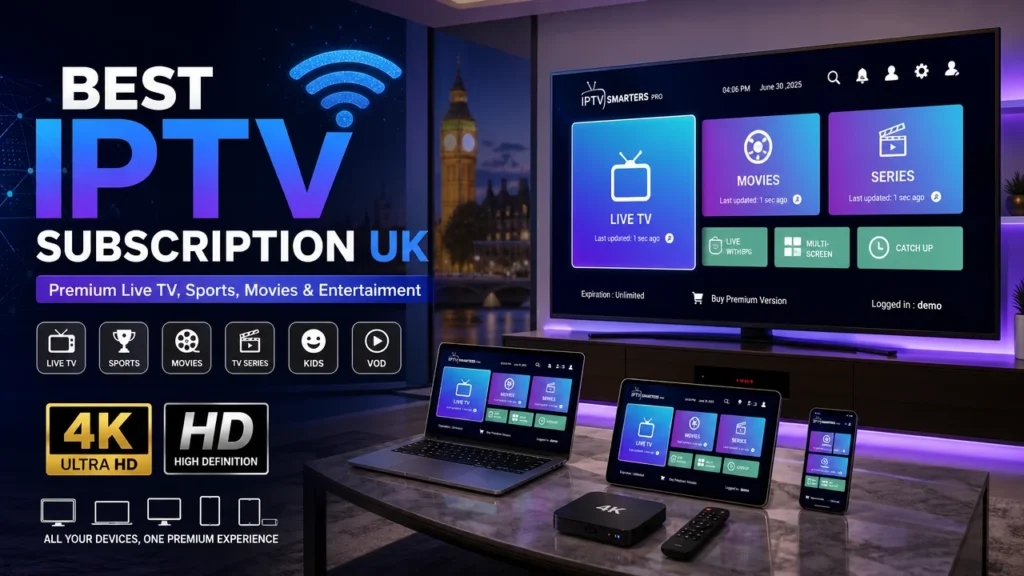
The setup shown above reflects what most installations actually look like in 2026. A router, a streaming device, and the apps that connect them. The simplicity of the diagram mirrors the simplicity of the real installation. If you can connect a phone to Wi-Fi, you can set up IPTV.
Popular Belief vs Documented Reality
See current details, seasonal promos, and full tier packages from providers that pass the trial-and-support test.
Learn more about how does iptv work →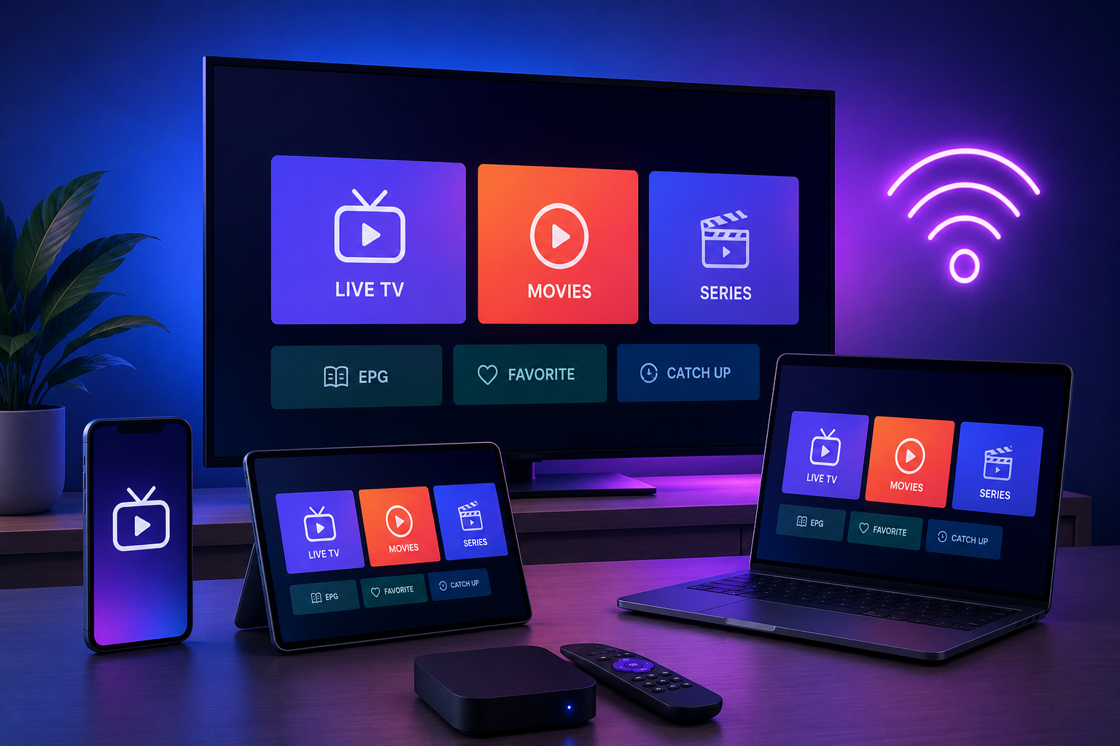
This delivery path explains why your internet connection quality matters more than any other factor. The broadcaster sends the feed to an encoder, which compresses the video and pushes it to the provider’s servers. From there, your device requests the stream, and the server sends it in packets across the internet. A bottleneck at any stage—your Wi-Fi, your ISP’s routing, or the provider’s server capacity—shows up on your screen as buffering.
The Bottom Line on How IPTV Works
IPTV is neither magic nor a scam. It’s a mature delivery technology that can replace or complement cable, but only when you choose a provider that operates transparently. The myths covered here—illegality, redundancy, complexity, buffering, and unreliability—each fall apart under scrutiny. What remains is a service that delivers live television over the internet at a fraction of cable’s cost.
Start with a trial, wire your main device with ethernet, and pay monthly until you’ve verified the service for yourself. That approach costs less than cable, avoids the worst gray-market traps, and gives you the live TV experience you actually want. When a provider passes that test, you’ll understand why millions of viewers have already cut the cord for IPTV.
Featured Streaming Selection:
Explore how does iptv work Plans →Affiliate Disclosure: Clicking this secure link verified by our network supports our team through standard partnership terms at zero extra cost to your invoice.
Frequently Asked Questions
This article contains affiliate links. Our editorial analysis remains independent.